Project introduction
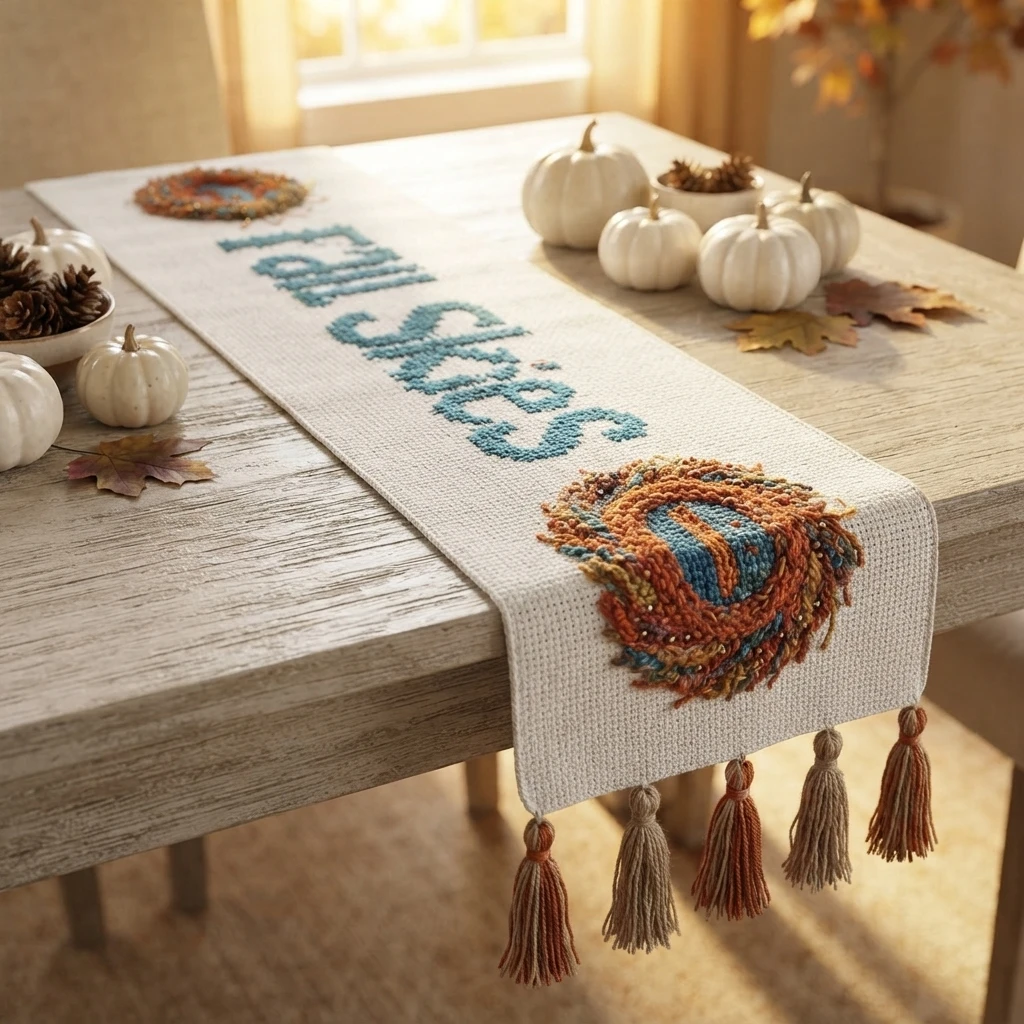
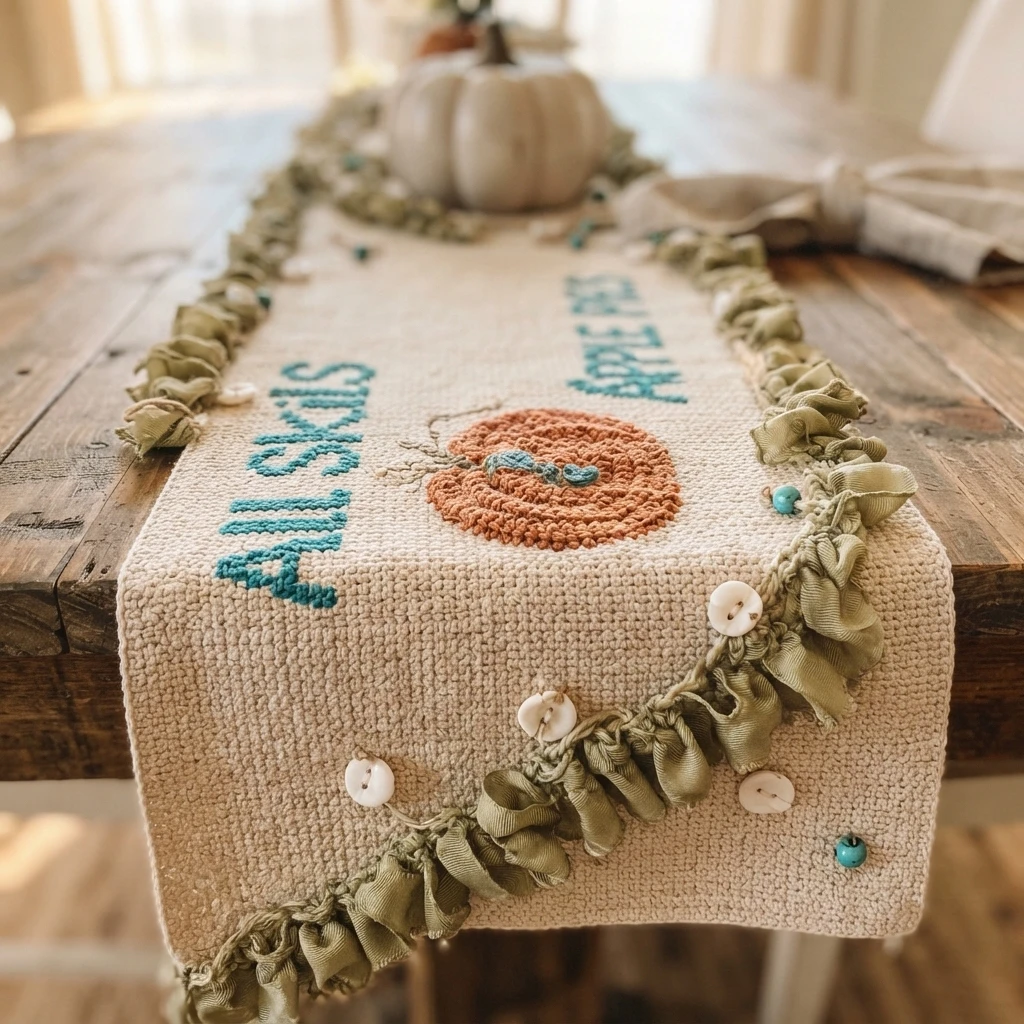
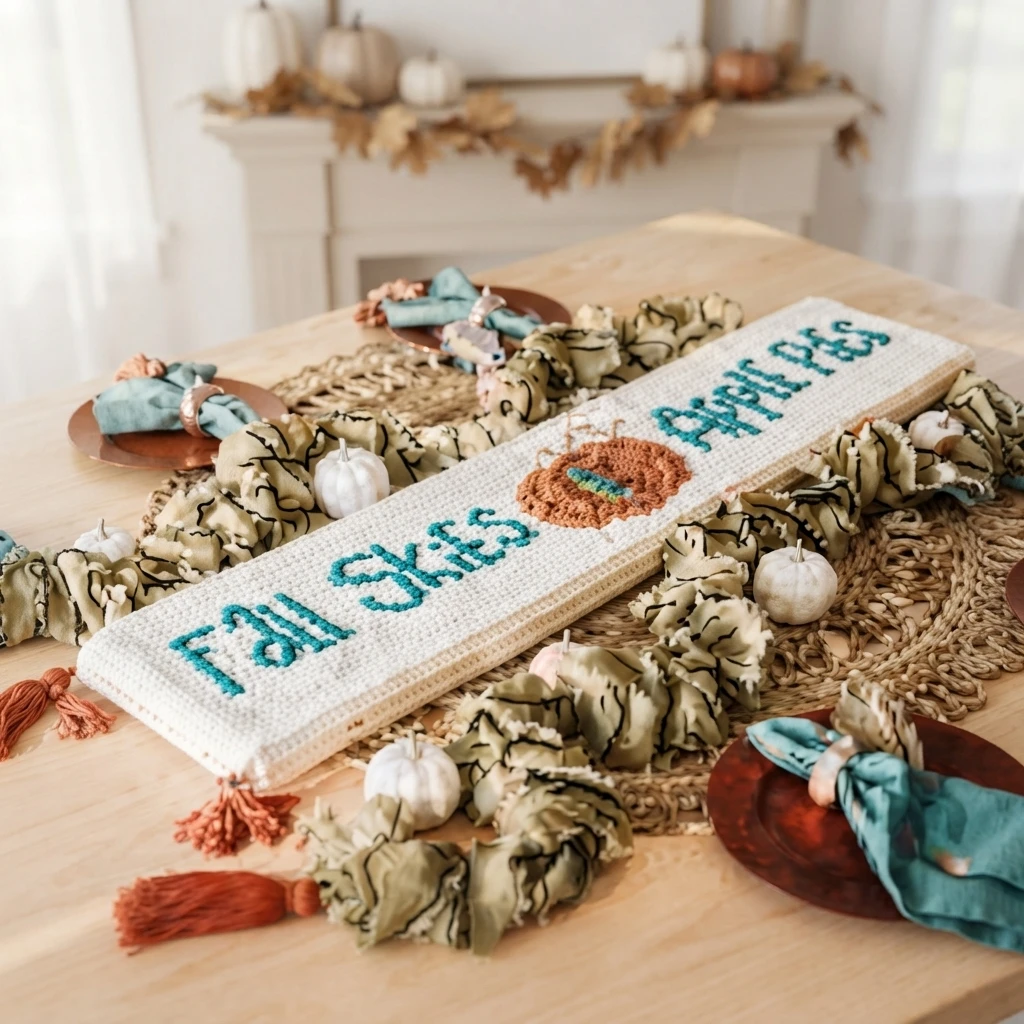
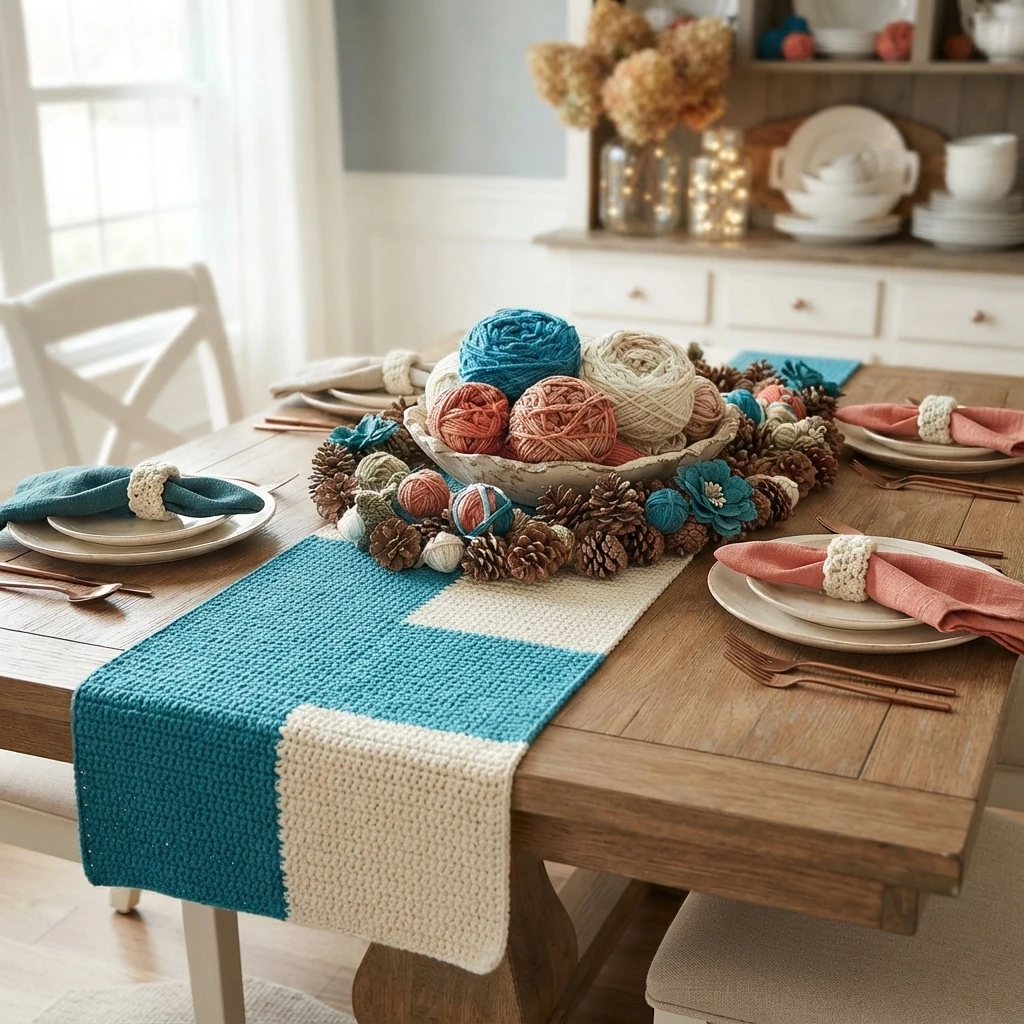
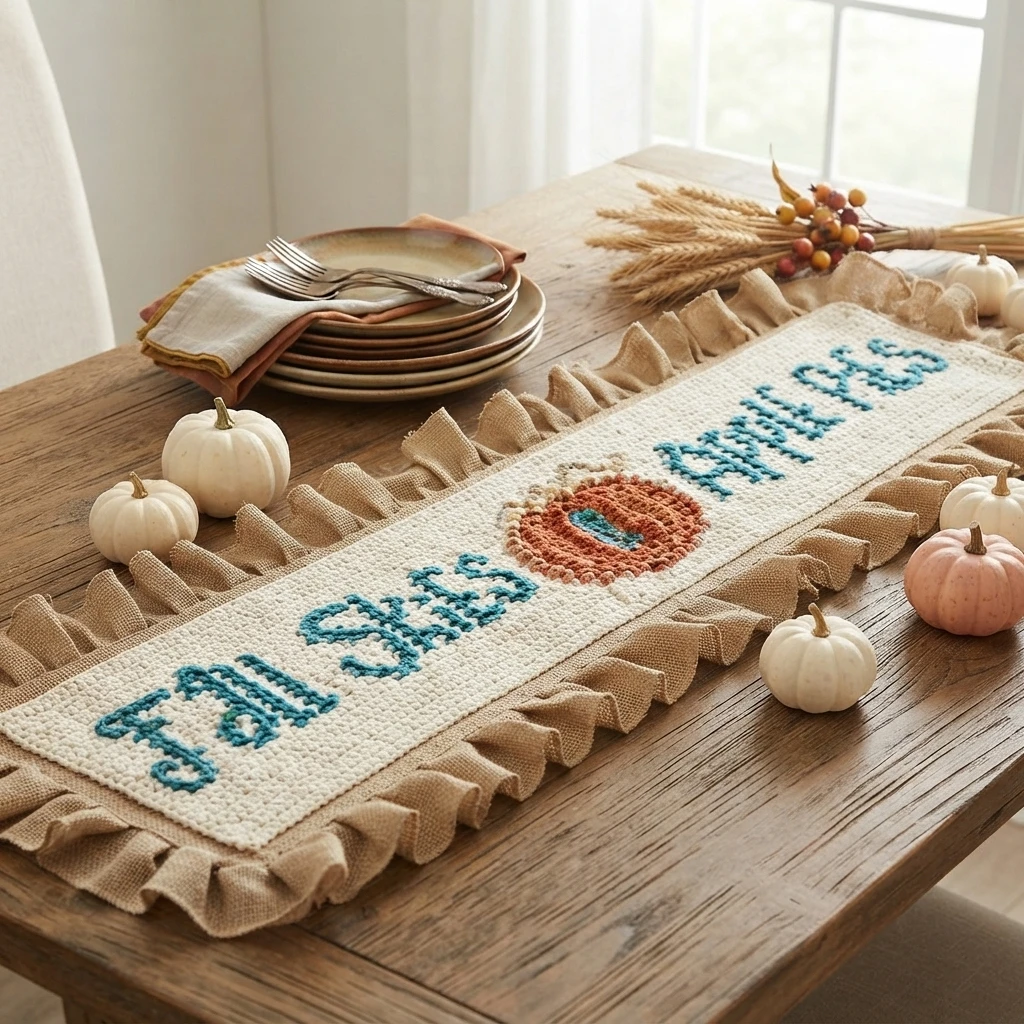
This is a pattern overview, not a complete crochet tutorial. Fall Skies & Apple Pies is a colorful table runner by Briana K Designs, planned in seasonal shades and worked with crochet colorwork. For the complete chart and written pattern, visit the Original designer’s pattern and instructions. This guide gathers the project details to help you decide whether it suits your plans.
How to Crochet A Table Runner
The runner is made flat in rows, with a chart and written directions to help you follow the color design. The colorwork combines intarsia with yarn carried across the back. The listed skill level is Skilled Beginner, so this is a project to approach with some comfort managing color changes. Bobbins or small yarn balls can keep separate strands organized as you work.
Because the back is not intended to show, the designer’s guidance emphasizes steady tension and tidy stitches on the front. The chart and written version offer two ways to track the changing colors. If you prefer visual references, take a look at the chart section below before deciding which format will be easiest to follow.
Fall Skies & Aple Pies Table Runner Crochet Supplies
Gather the following materials before starting. The quantities below are the designer’s listed estimates for this project, including the specified color names and approximate total yardage. Keep removable markers nearby if useful for tracking a row, along with basic finishing tools.
- Brava Worsted yarn, 100% premium acrylic, 218 yards per 100 g: White, 3 skeins; Fig (light green), 1 skein; Tidepool (blue), 1 skein; Persimmon (orange), 1 skein; Brindle (brown), 1 skein.
- Approximately 725 yards (663 meters) of yarn in total.
- A 5.0 mm (H) crochet hook, or a hook that achieves the stated gauge.
- Removable stitch markers if needed, a yarn needle for weaving in ends, and scissors.
Crochet Hook
The specified hook is 5.0 mm, also labeled size H. The pattern allows for using a different hook if needed to meet gauge. Check your swatch against the designer’s gauge information rather than relying on the hook label alone, since individual tension can affect the fabric and finished size.
Notions
Useful notions are removable stitch markers, a yarn needle, and scissors. The markers are optional, while the needle is listed for weaving in ends. Keeping these simple tools in your project bag makes it easier to pause between color sections and complete the finishing work after the crochet is done.
Yarn
The project specifies Brava Worsted in five colors. White is the main shade, while Fig, Tidepool, Persimmon, and Brindle provide the additional colorwork tones. The source gives the yarn as 100% premium acrylic with 218 yards per 100 g. Use the named colors as a reference when preparing supplies for the original design.
Yardage
The stated total is approximate: 725 yards (663 meters). Treat that as the designer’s estimate for the listed project, not a guarantee for every crocheter. Tension and any changes to the original design can affect how much yarn is used, so consult the source pattern if you plan to alter the project.
Abbreviations/Stitches
The pattern uses standard US crochet terms. Its abbreviations are: Blo, back loop only; ch, chain; RS, right side; sc, single crochet; sl st, slip stitch; sts, stitches; WS, wrong side. Knowing these short forms will make the chart notes and written color instructions easier to read.
Gauge
The stated gauge is 13 sc stitches and 14 rows over 4 inches (10 cm), using an H hook. Make a gauge swatch and compare it with this reference if finished sizing matters for your table. The designer’s full pattern is the place to check for any additional guidance on matching the fabric.
Skill Level
The skill level is listed as Skilled Beginner. The project involves working rows and changing colors, so be ready to keep track of several strands as the motif develops. The source provides both charted and written colorwork, which can be useful if you like to cross-check your progress.
Size
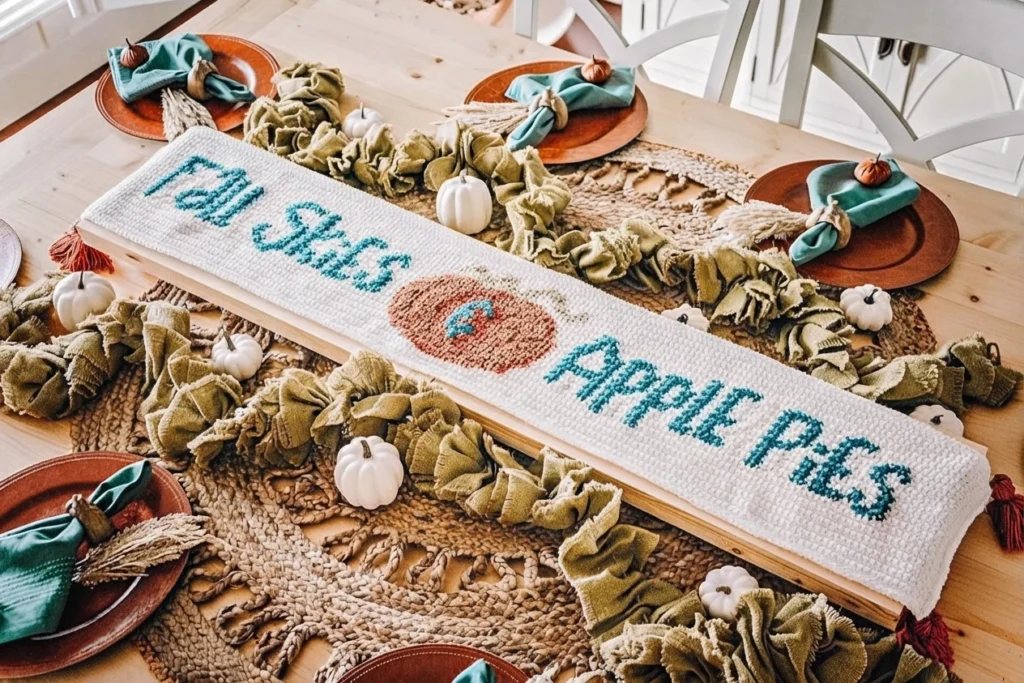
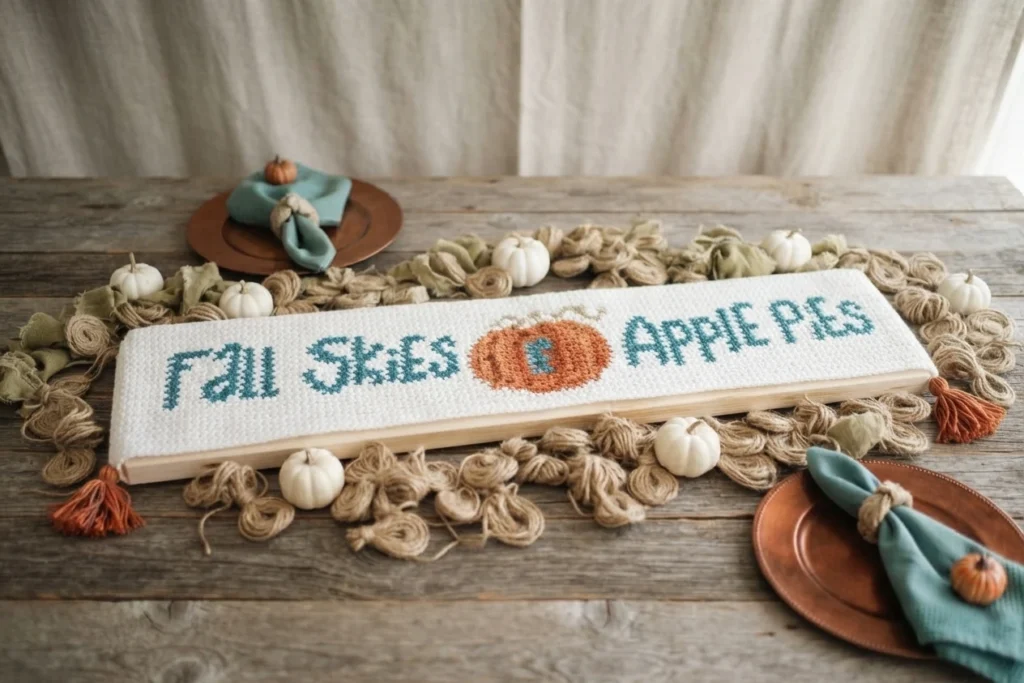
The stated finished dimensions are 10 inches (25 cm) in length and 55 inches (140 cm) in width. These measurements describe the designer’s sample. Gauge, yarn handling, and blocking can influence the final result, so refer to the linked original instructions for the complete sizing context.
Crochet Table Runner Construction Overview
The source offers a free web version of the pattern, which readers can unlock on the blog with an email entry. It also describes an ad-free PDF as a paid format. These are separate access options: the web pattern is free, while the printable PDF is not presented as free. Use the original designer page for the current pattern materials.
Fall Skies & Apple Pies Table Runner Charts
The chart is a visual companion to the written directions, rather than a separate project. Use the chart area on the original designer’s page to see how color placement is organized, and consult the written version whenever you want to check the row directions. This overview does not reproduce the chart or its individual color sequences.
Table Runner Written Construction Overview
The written pattern describes a flat, rectangular piece worked in rows, with the right and wrong sides alternating. Rows 1 through 3 and 33 through 35 are entirely in the main color (White), while rows 4 through 32 introduce contrasting blocks and smaller color details. In the color labels, A is White, B is Orange, C is Blue, D is Brown, and E is Green.
All stitches in the colorwork are single crochet, and the source uses color-by-color runs to map the motif. Intarsia and yarn carried across the back are both part of the approach. This section is only a construction summary: follow Briana K Designs’ linked chart or written instructions for the exact row-by-row placement, color changes, and stitch directions.
When following the designer’s instructions, pay attention to the RS and WS labels and the direction arrows shown for rows. Small yarn balls or bobbins can help prevent loose strands from tangling. Keep the fabric tension even, especially where colors change, and use the supplied gauge as a reference. For any unclear instruction, refer to the original rather than guessing at a correction.
Table Runner Edging
The written pattern finishes the border with slip stitches worked around all sides, adding one chain at each corner. The first pass is left unjoined; a second pass works through the back loops, again with a chain at each corner, and is then joined and fastened off. See the original instructions for the exact edging sequence.
Finishing
Finishing notes call for weaving in all yarn ends and blocking the runner to its dimensions. Follow the source pattern’s guidance for the finished piece and handle the fabric with care while arranging it to dry. Blocking is the final step described before the decorative corner details.
Tassels
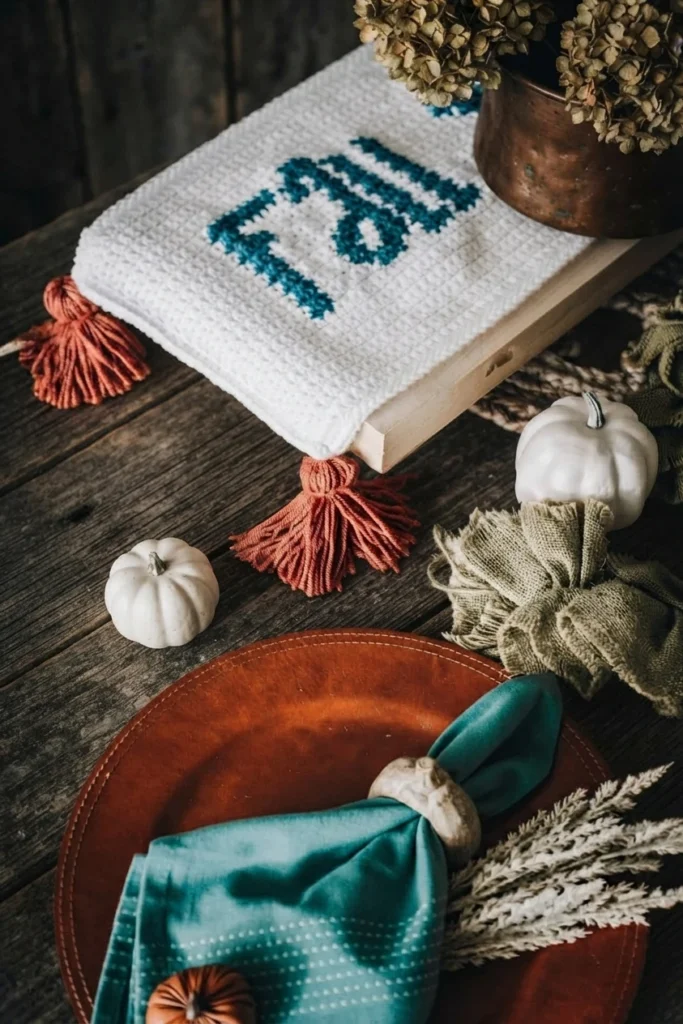
The design includes four tassels made with orange yarn using a large Clover tassel maker, with one attached at each corner. The original pattern page provides this detail as part of its finishing information. For directions specific to making and attaching them, use the linked designer instructions rather than relying on this overview alone.
I’d Love to See Yours!
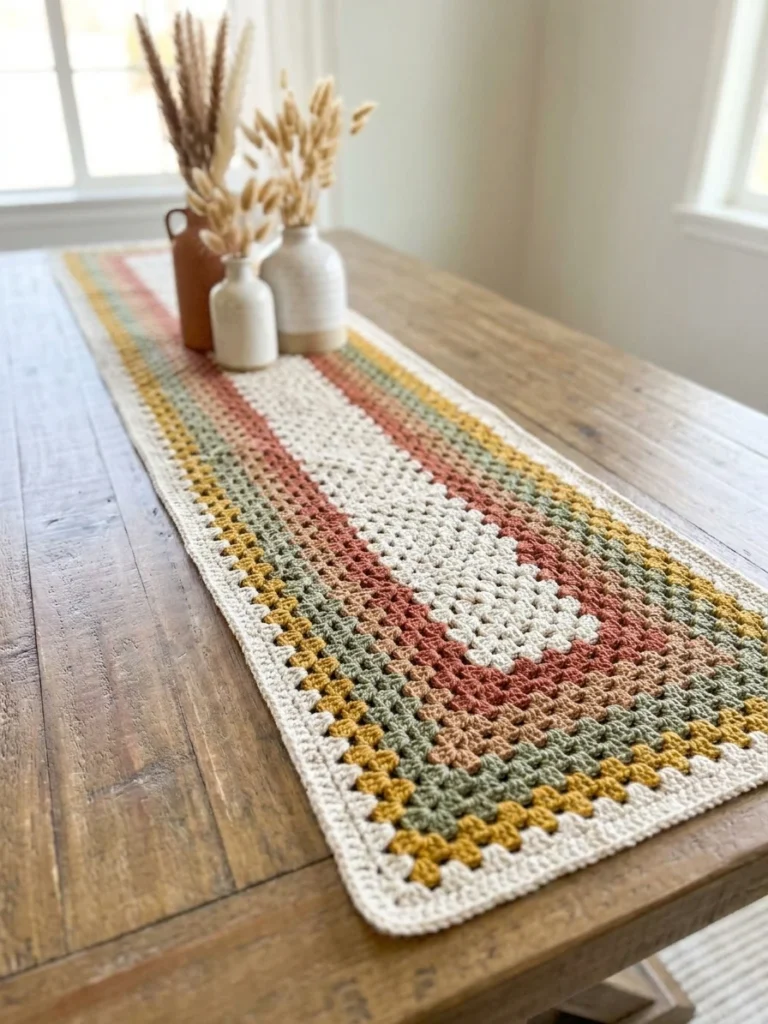
Once the runner is complete, take a moment to compare the finished color layout with the chart and written pattern. The combination of a broad main-color field and autumnal accents is the defining visual feature of this design. Keep the source pattern handy if you want to confirm a detail or revisit how its rows are arranged.
What should you make next?
If you are browsing for another seasonal table project, PatternCrochet has additional overviews to explore: Fall Table Runner: Pattern Overview and Thanksgiving C2C Grateful Crochet Table Runner: Pattern Overview. These guides can help you compare project ideas and decide which original pattern to visit next.
Keep the hook movingReaders Are Loving
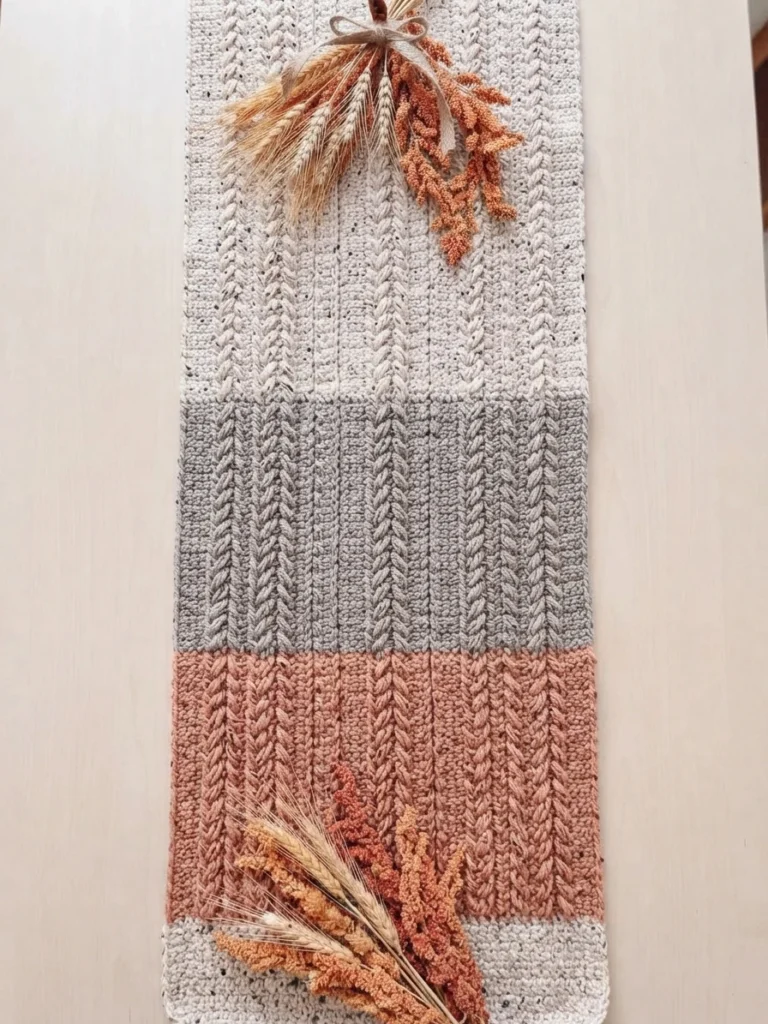
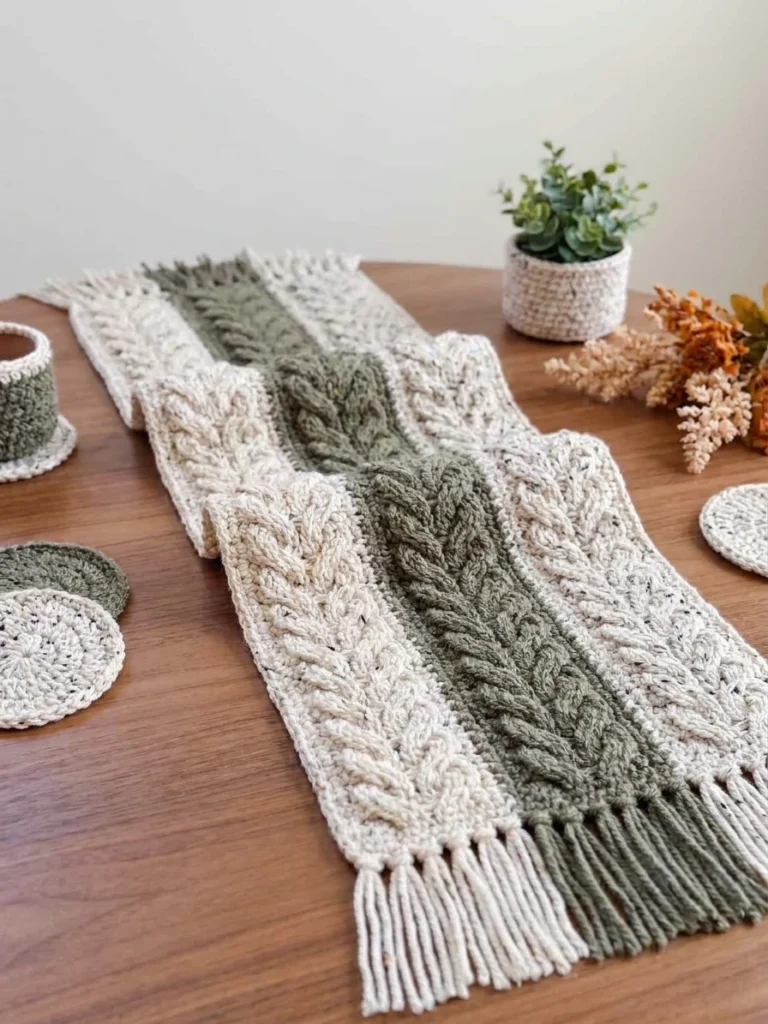
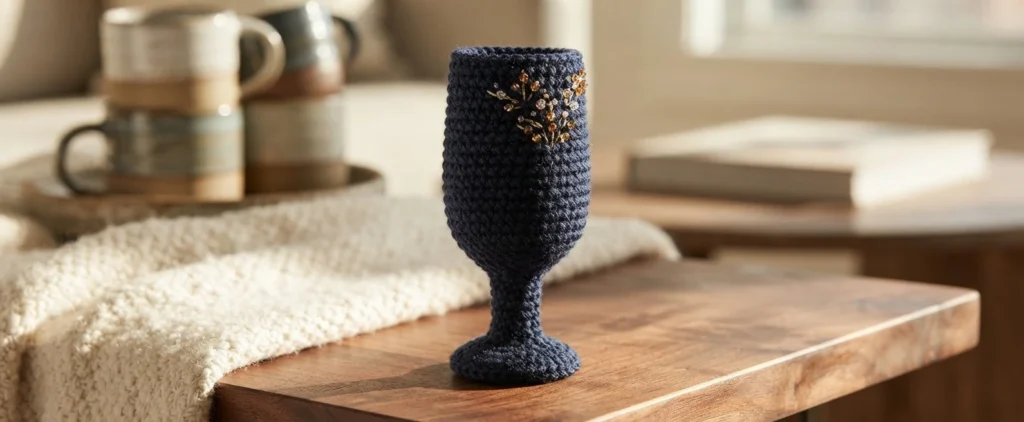
The source page also names other crochet projects, including Wheat Pumpkins, Wheat Stitch Trees, Petal Loop Pumpkins, Mini Witch Hat Trio, Wine Glass Cover, Wheat Stitch Acorns, Wheat Cup Cozy, and Easy Beginner Mittens. They cover a mix of seasonal decor and wearable makes, offering a few different directions if you would like to move on from table linens.